Nylon / PA CNC Machining
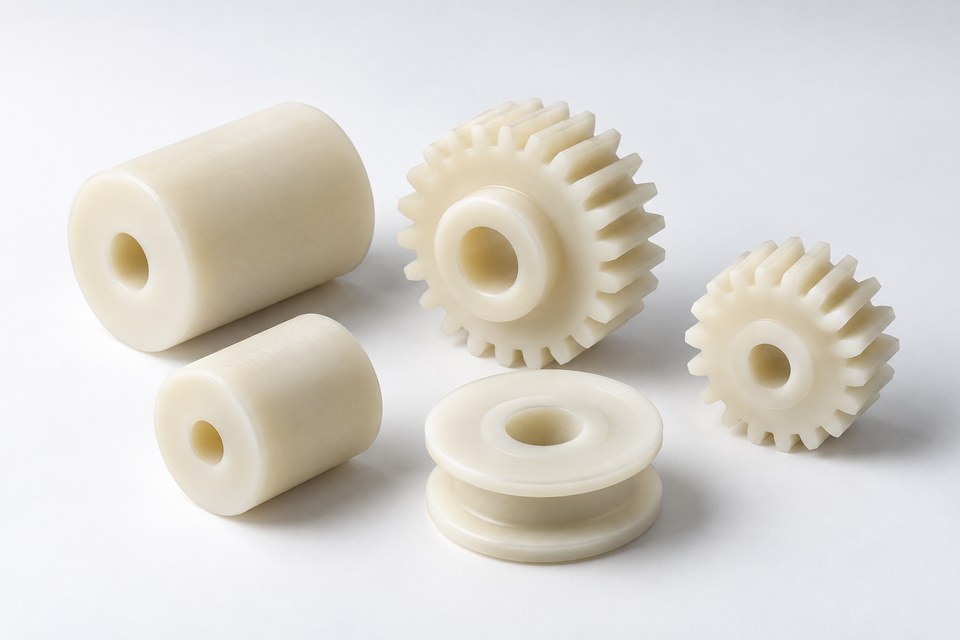
Nylon is often considered for rollers, gears and loaded wear parts. Moisture, service temperature and contact conditions are part of the material decision.
- Grade family
- PA6 · PA66 · MC
- Typical applications
- Bushings, rollers, gears and impact-resistant machine components.
Confirm the exact material grade and operating conditions before ordering.
Material selection notes
Useful strength, impact and wear performance
Moisture absorption changes dimensions and properties
Specify conditioned or dry-state acceptance where relevant
Cast and extruded stock can behave differently
Critical review point
Moisture absorption and dimensional change in service.
Manufacturing routes to review
Suitability depends on the exact grade and process variant. These links are a starting point for review.
Prepare your machining enquiry.
These details help us review the part and compare the right manufacturing options.
- Material & grade
- Identify PA6, PA66 or cast nylon and any fillers or lubricants. Cast and extruded grades should not be treated as interchangeable.
- Fit & service conditions
- State whether dimensions are accepted dry or conditioned. Moisture absorption can change the fit of a finished nylon component.
- Drawing & inspection
- For rollers and gears, share the mating part, load, speed and lubrication conditions alongside your drawing and quantities.
Common questions
Why specify the moisture condition?
Nylon can absorb moisture after machining. Agreeing the conditioning and inspection state helps align the measured size with the intended service conditions.
Can you review a replacement roller?
Send the roller dimensions, shaft fit and operating conditions. A photo helps explain the application; a controlled drawing defines the part to manufacture.