PEEK CNC Machining
PEEK is a candidate for demanding equipment exposed to heat or chemicals. Grade selection, functional requirements and traceability should be defined before machining.
- Grade family
- PEEK · GF / CF grades
- Typical applications
- High-temperature, chemical and demanding precision applications.
Confirm the exact material grade and operating conditions before ordering.
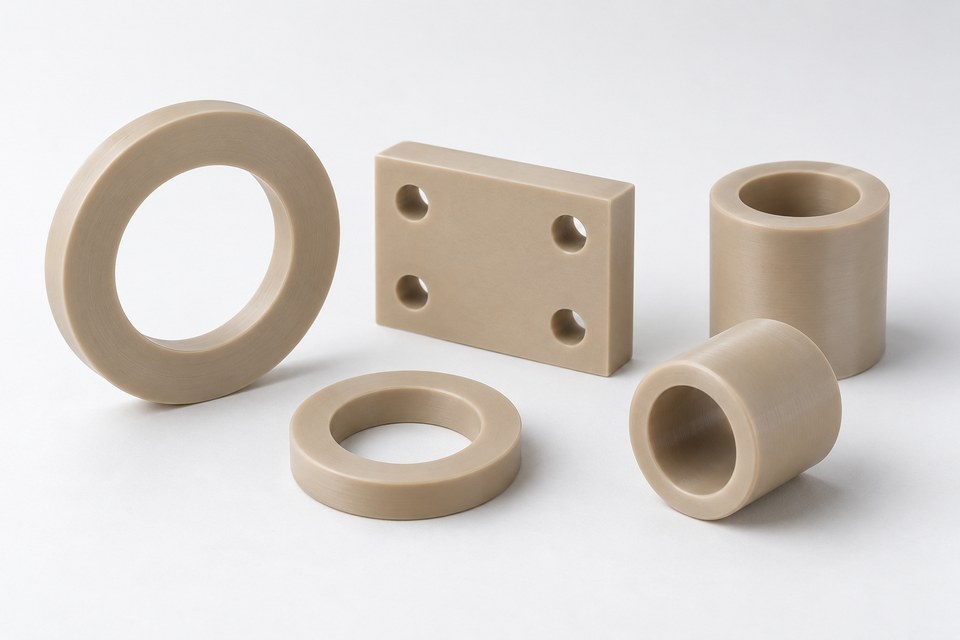
Material selection notes
High-temperature and chemical performance
Material cost makes nesting and scrap control important
Confirm virgin, glass-filled or carbon-filled grade
Traceability and supplier documentation should be specified
Critical review point
Material traceability, stock cost and heat management during machining.
Manufacturing routes to review
Suitability depends on the exact grade and process variant. These links are a starting point for review.
Prepare your machining enquiry.
These details help us review the part and compare the right manufacturing options.
- Material & grade
- Specify unfilled, glass-filled or carbon-filled PEEK. Fillers change material behaviour; confirm electrical requirements before selecting an insulating part's grade.
- Fit & service conditions
- Share operating temperature, chemical exposure and critical fits. Thin walls and fine features need a geometry-specific machining review.
- Drawing & inspection
- Specify the approved material, required certificate and inspection scope. A PEEK designation alone does not establish medical or food-contact compliance.
Common questions
Are all PEEK grades suitable for insulation?
No. Unfilled and filled grades can have different electrical properties. Select against the supplier's grade-specific data and your operating requirements.
How can I keep a PEEK quotation comparable?
Use the same grade, drawing revision, quantities and inspection scope for each enquiry. Material substitutions and additional documents should be agreed explicitly.