POM / Acetal CNC Machining
POM is a useful starting point for low-friction machine parts where dimensional stability matters. Choose the grade around the working load, mating surfaces and environment.
- Grade family
- POM-C · POM-H · Delrin
- Typical applications
- Stable precision parts, jigs, locators, rollers and sliding components.
Confirm the exact material grade and operating conditions before ordering.
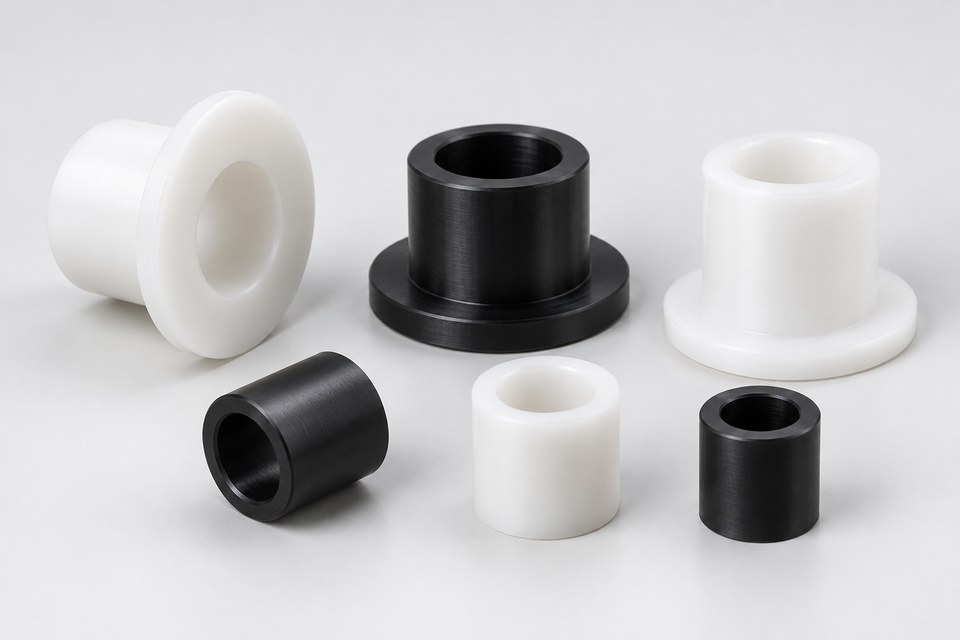
Material selection notes
Good dimensional stability for many precision machine parts
Low friction and good machinability
Confirm copolymer vs homopolymer, colour and compliance
Avoid assuming metal-style tolerances across large or thin parts
Critical review point
Moisture, grade selection, thin-wall deformation and tolerance stack.
Manufacturing routes to review
Suitability depends on the exact grade and process variant. These links are a starting point for review.
Prepare your machining enquiry.
These details help us review the part and compare the right manufacturing options.
- Material & grade
- Specify POM-C or POM-H, colour and any approved stock brand. Delrin is a brand of acetal homopolymer, not a name for every POM grade.
- Fit & service conditions
- Mark the bore, shaft fit and locating faces. Identify critical tolerances individually, especially on thin walls or large parts.
- Drawing & inspection
- Include the drawing revision, quantities and inspection requirements. Request material documentation when the application needs it.
Common questions
POM or nylon for a close-fitting part?
POM generally absorbs less moisture than common PA6 and PA66 grades. Review humidity, load and wear together before choosing; the best fit also depends on the exact grade and geometry.
Can the part be made from a sample?
A sample or photos with measurements can start the discussion. Critical dimensions, fits and the final drawing must be agreed before manufacture.